
The Cordillera Region
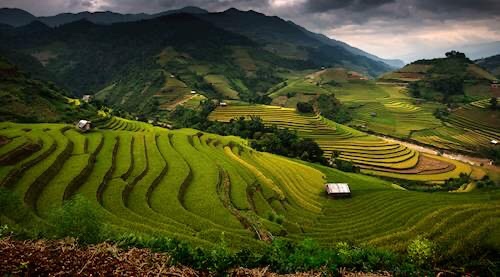
The Cordillera Region is composed of the central mountain ranges located in Northern Luzon, Philippines. It has a total land area of approximately 1.75 million hectares or 17,500 square kilometers. The provinces comprising the Cordillera region are Abra, Mountain Province, Kalinga, Apayao, Ifugao, Benguet, and the city of Baguio. The present population of the region is approximately 1.3 million.
The headwaters of major river systems in northern Luzon originate in the Cordillera Region such as the Chico river, the Agno river, the Amburayan river, the Abulog and Apayao twin rivers and the Abra river. The Cordillera Region is known for its rich mineral deposits, such as gold and copper found in the mineral belt traversing the entire mountain region. Primary gold reserves is estimated to be 1,964,060 metric tons and primary copper at 960,634,900 metric tons. It is also known for its forest endowment of hard wood and other varieties of trees. Forests occupy approximately 68.57% of the Cordillera’s land area, but this was reduced to 46.28% by 1997. The soils of the Cordillera are generally rich. However, because of its rugged terrain, very steep slopes, and erosive characteristic, there is only a small percentage of land devoted to agriculture of wide area.
The Cordillera Region is the ancestral homeland of the Cordillera indigenous peoples, collectively referred to as the “igorots”, meaning “people of the mountain”. There are seven (7) major ethnolinguistic groups or peoples, namely the Kankanaeys, the Bontocs, the Kalingas, the Ifugaos, the Tingguians, the Apayao or Isneg and Ibaloy. However, these are the popular reference to indigenous groups, but there are more “peoples” as distinct as “ili”. “Ili” is a self identifying group of indigenous people, with their own defined territory as their ancestral land, and their own indigenous socio-cultural systems.
The culture and ways of life of the Cordillera indigenous peoples have common and diverse characteristics. The common features are found in their concept of ancestral land ownership and collective management of the land. The symbiotic relationship between the people and the land and environment is highly developed in the region, such that land is equated with life itself.
The economic system of indigenous peoples is largely subsistence economy. The agricultural cycle from planting to harvesting is collectively performed by the people, and certain rituals and indigenous practices are observed. There are also indigenous practices for the management of communally owned land and resources such as forests and river bodies. Community unity, collective work, mutual cooperation and assistance, selflessness and upholding the common good are the underlying values of villagers and tribes for peaceful co-existence.
Indigenous socio-political systems are widely practiced in the region, such as decision-making by consensus where the opinion of elders is given premium. The cycle of life, from birth to death, is highly regarded by the performance of certain rituals upholding the sanctity of life, and death is seen as a process of joining the spirit world.
Although the indigenous systems are now disintegrating rapidly mainly due to external factors and also internal developments, the indigenous peoples relationship with their land remains relatively strong.

 Luzon 2