Manila is a major hub for cultural events and it houses many museums, theatres and art centres. The city hosts a plethora of events revolving around music, movies, art or traditional holidays. There is a huge western influence in the culture and lifestyle of the people of Manila in terms of technology, music, movies and fashion. Christmas is an important holiday in Manila. Celebrations start as early as October and continue all the way till January. Other religious celebrations include the Flores de Mayo, the Feast of the Black Nazarene and more. \n\nManila also has its own version of the Cannes Film Festival in November called Cinemanila. Manila Day is a public holiday on 24th June honouring the origin of the city, as each district throws its own fiesta. Filipino food comprises of rice, meats, seafood, egg and vegetables packed with flavour and spice.
Because green fingers are so much better than a green thumb.
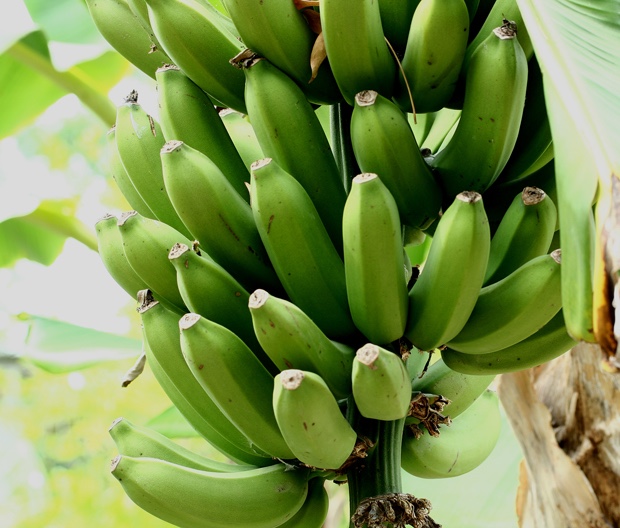
Banana trees abound in the Southeast Asian landscape and are enjoyed by Filipinos in a multitude of ways. Whether it’s eaten as is, cut and dried into chips, or cooked into native delicacies like nilupak, the banana is one fruit you can always find a use for.
There was once a farmer named Mang Pedro who had a beautiful daughter. Mindful of their only child’s extraordinary beauty, Mang Pedro and his wife forbade Juana from consorting with young men. Since Juana was as dutiful as she was pretty (and didn’t have Facebook), she found it easy to obey her parents’ wishes. But one day, she chanced upon a handsome young farmer named Aging. The two quickly became enamored with each other.
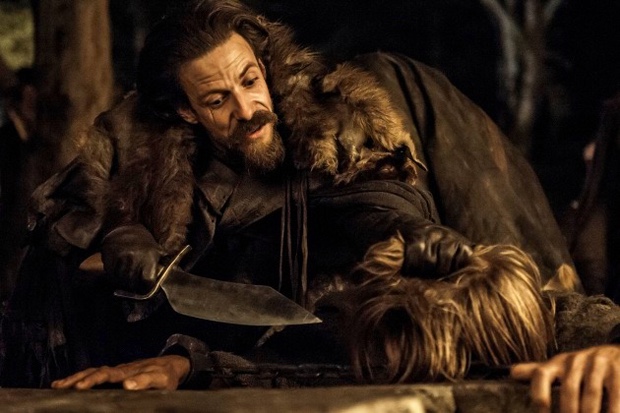
Like any forbidden couple, Juana and Aging found ways to meet in secret. One day, Juana’s mother left to run some errands in town while Mang Pedro was out working the fields. Aging took the opportunity to visit Juana. The two were so engrossed in each other (doing God knows what) that neither noticed the sky growing dark. When Mang Pedro arrived home and saw Aging inside, the young man’s arm resting on the windowsill, he was enraged. Mang Pedro severed the unfortunate suitor’s arm with one swing of his razor sharp bolo.
“I feel you, bro.”
Reeling from blood loss and shock, Aging ran out of the house. Juana chased after her suitor, but was unable to catch up with him. Night fell and the only sign of Aging that remained was his bloody, severed arm. Juana took it and tearfully buried it in their yard. Her act of devotion was rewarded the next morning, when a strange new tree sprang from their garden. It had a tall green stalk, graceful branches, and long yellow fruits that curved like fingers. The fruits came to be known as saging (the Tagalog word for “banana”), after the first guy in Philippine history whose hand (but thankfully, not any other part) got chopped off by his girlfriend”s angry father.
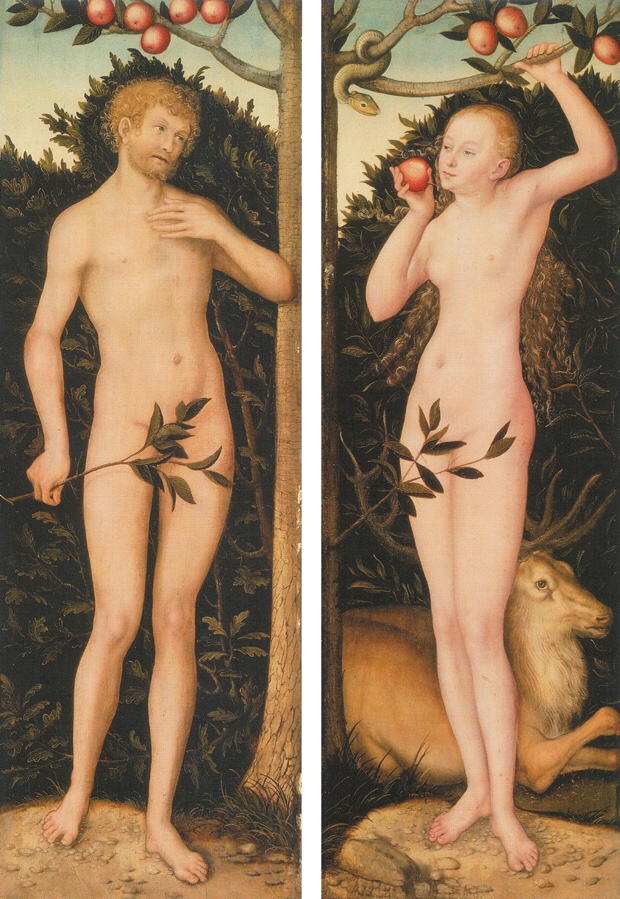
It”s hard to imagine Eve taking a bite out of that.
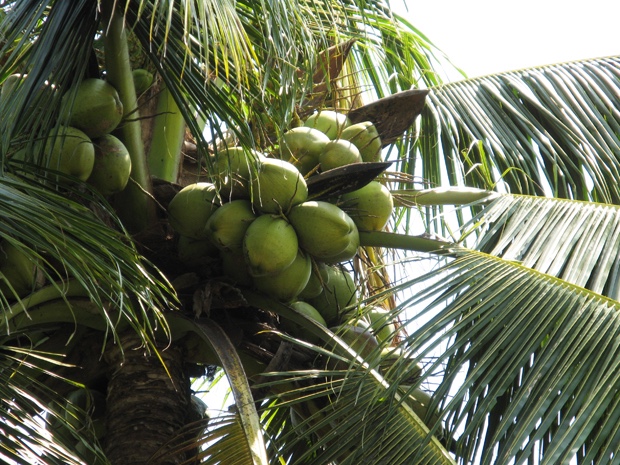
Possibly the default symbol of the tropics, the coconut tree was dubbed the “tree of life” for its versatility. Its trunk makes for sturdy lumber, its leaves and husks are woven into decorative items, and its flesh and water are delicious as they are or in a variety of dishes. In the Philippines, buko juice is a popular thirst quencher and virgin coconut oil is touted as the cure for everything from limp hair to a sagging bottom.
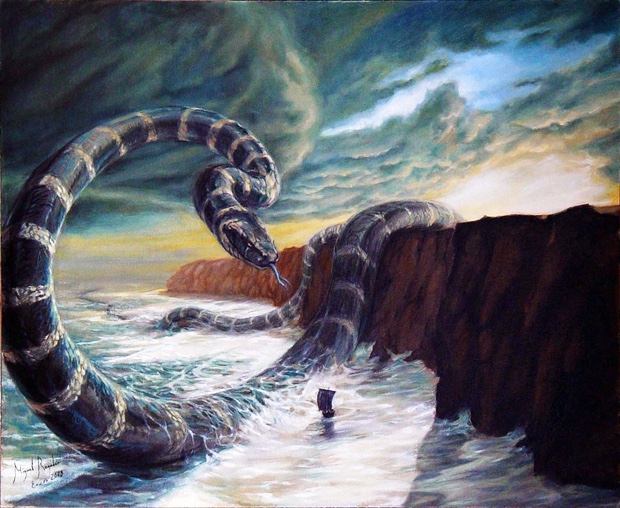
Long ago, there were only three living entities in the universe. Each one was a powerful god, and believed that he was the only one of his kind in existence. There was Bathala, who ruled over a lonely and empty world, and Ulilangkalulua, a giant snake who presided over the clouds. Since his kingdom was also devoid of life, the snake god often visited the earth to explore its mountains and caves.
One earthly visit, Ulilangkalulua encountered Bathala and the two proud gods ended up battling each other for universal dominance (and perhaps, the best sunbathing spot on the planet). In the end, Bathala slew the snake god and burnt its giant carcass.
This looks like something out of Salazar Slytherin”s Chamber of Secrets.
Years after the epic skirmish, the third god, a winged head named Galangkalulua, wandered into Bathala’s home. Instead of challenging the intruder to another battle, the earth god extended the hand of friendship to the floating head. Though Galangkalulua had no hand of his own to extend (being a disembodied head and all), he was still able to convey his acceptance. The two lived happily for years, until the day Galangkalulua fell ill. Bathala nursed his friend devotedly, but it was to no avail. Before he died, the winged head asked his friend to bury his remains on the same spot where he burned the giant serpent’s body, and promised that what would emerge would help sustain the life that Bathala could create to keep him company.Coconut leaves would have protected Adam and Eve”s modesty better than apple leaves.
Bathala honored his friend’s deathbed wish, and a remarkable tree came into being as a result. It had a hard, ringed trunk like the giant serpent’s body, fruits that looked like heads, and sweeping branches springing from behind the fruits like wings. Delighted, Bathala breathed life into the first man and woman, and the coconut tree provided for their needs and those of the generations that came after them. In time, the fruit was named “buko” or “coconut” (from a 16th century word which means “head” or “skull”) for the three holes on its husk that resembled a human face.
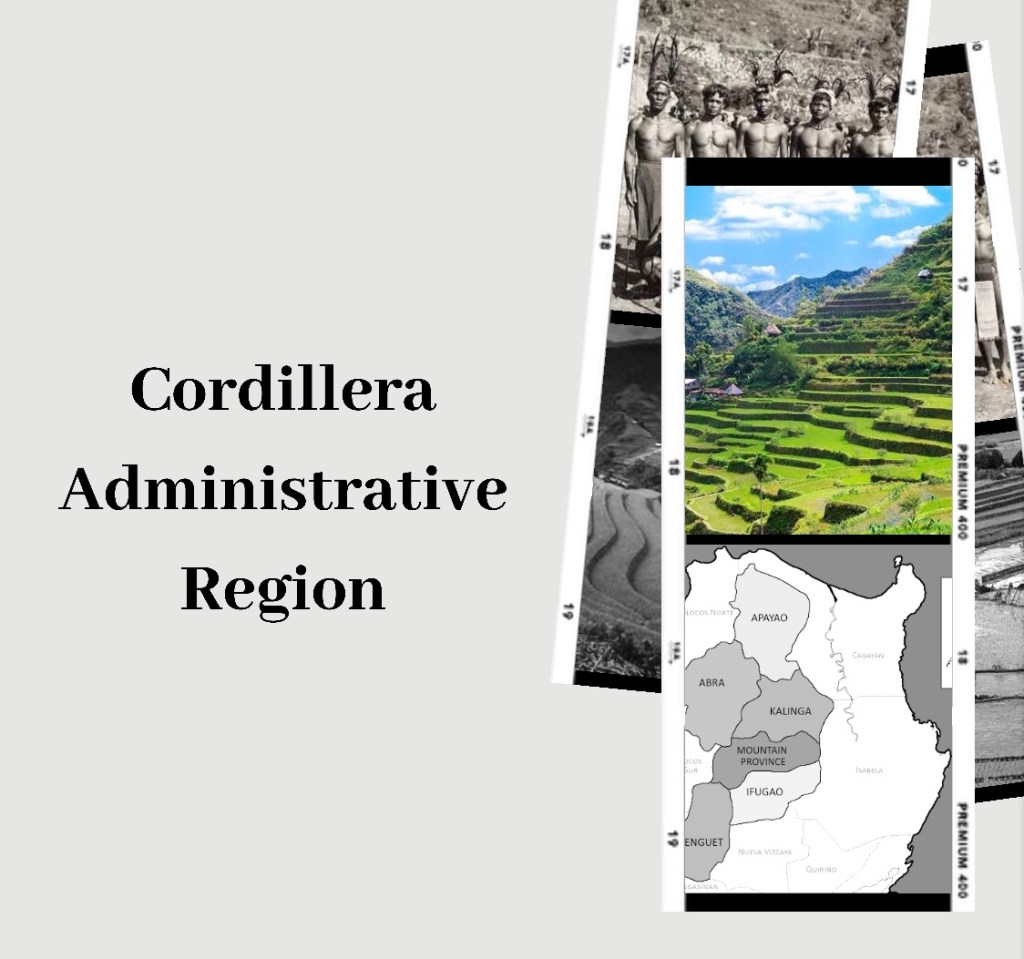
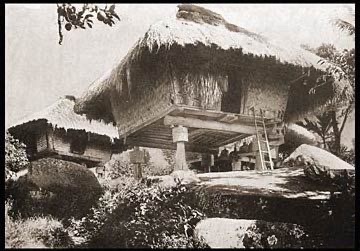
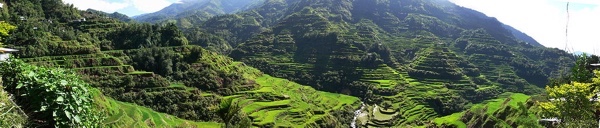
The Cordillera Region is composed of the central mountain ranges located in Northern Luzon, Philippines. It has a total land area of approximately 1.75 million hectares or 17,500 square kilometers. The provinces comprising the Cordillera region are Abra, Mountain Province, Kalinga, Apayao, Ifugao, Benguet, and the city of Baguio. The present population of the region is approximately 1.3 million.
The headwaters of major river systems in northern Luzon originate in the Cordillera Region such as the Chico river, the Agno river, the Amburayan river, the Abulog and Apayao twin rivers and the Abra river. The Cordillera Region is known for its rich mineral deposits, such as gold and copper found in the mineral belt traversing the entire mountain region. Primary gold reserves is estimated to be 1,964,060 metric tons and primary copper at 960,634,900 metric tons. It is also known for its forest endowment of hard wood and other varieties of trees. Forests occupy approximately 68.57% of the Cordillera’s land area, but this was reduced to 46.28% by 1997. The soils of the Cordillera are generally rich. However, because of its rugged terrain, very steep slopes, and erosive characteristic, there is only a small percentage of land devoted to agriculture of wide area.
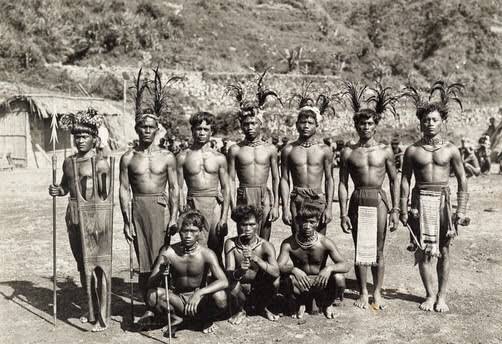
The Cordillera Region is the ancestral homeland of the Cordillera indigenous peoples, collectively referred to as the “igorots”, meaning “people of the mountain”. There are seven (7) major ethnolinguistic groups or peoples, namely the Kankanaeys, the Bontocs, the Kalingas, the Ifugaos, the Tingguians, the Apayao or Isneg and Ibaloy. However, these are the popular reference to indigenous groups, but there are more “peoples” as distinct as “ili”. “Ili” is a self identifying group of indigenous people, with their own defined territory as their ancestral land, and their own indigenous socio-cultural systems.
The culture and ways of life of the Cordillera indigenous peoples have common and diverse characteristics. The common features are found in their concept of ancestral land ownership and collective management of the land. The symbiotic relationship between the people and the land and environment is highly developed in the region, such that land is equated with life itself.
The economic system of indigenous peoples is largely subsistence economy. The agricultural cycle from planting to harvesting is collectively performed by the people, and certain rituals and indigenous practices are observed. There are also indigenous practices for the management of communally owned land and resources such as forests and river bodies. Community unity, collective work, mutual cooperation and assistance, selflessness and upholding the common good are the underlying values of villagers and tribes for peaceful co-existence.
Indigenous socio-political systems are widely practiced in the region, such as decision-making by consensus where the opinion of elders is given premium. The cycle of life, from birth to death, is highly regarded by the performance of certain rituals upholding the sanctity of life, and death is seen as a process of joining the spirit world.
Although the indigenous systems are now disintegrating rapidly mainly due to external factors and also internal developments, the indigenous peoples relationship with their land remains relatively strong.
Búgan was the only child of the god Hinumbían and his wife Dakáue. They lived in Luktán, the highest level of the Sky World. Búgan’s parents wanted her to get married, but she wasn’t interested in any of the available bachelors in Luktán. So her parents sent her down to a lower sky region, but there was no one there she wanted to marry, either. Then they sent her down to the lowest sky region, Kabúnian, which is the level just above the earth, and tried to set her up with Bagílat, the god of lightning.
Nothing doing, said Búgan.
“That Bagílat, he’s always running all over the Sky World, from the north to the south, from the east to the west, sending lightning bolts down to earth and destroying the plants and the trees. Why would I want to marry him?”
“In that case,” said Bagílat’s father, “maybe you should just go back home, to Luktán.”
But Búgan didn’t want to go home. Instead she went down to earth, to a place called Pangagauan, where she saw a young Ifugao man named Kinggauan, digging pits to catch deer and other game in. He was a poor man, so poor that he’d worn out his only clout [loincloth] and had to go about naked. He must have been handsome, too, because when Búgan saw him, she was filled with pity and decided that she wanted to marry him.
She went home to ask permission from her parents, which they gave (I guess they really wanted her to get married), and so she went down to earth with a pot of cooked rice, and a brand new clout (bahág). But when she approached Kinggauan’s hut, he was too embarrassed to come meet her, because he was naked.
“Don’t be embarrassed,” she said. “I have a clout for you.” And she tossed the clout into the open doorway. He put it on, but he still didn’t want to let her in.
“It’s bad luck to meet a woman when one is hunting,” he said.
“Don’t worry,” she said. “You’ll have good luck. Let’s eat the rice that I brought, and spend the night in your hut, and tomorrow we’ll go out and see how lucky you are in the hunt.”
And that was that. The next day, the two went out to the game pits, and discovered that they were full. Kinggauan spent the rest of the day slaughtering the game (except two little piglets, a male and a female, which he gave to Búgan) and hauling the meat back to the hut.
On the following day, Búgan asked Kinggauan why he lived in such a tiny hut, in such a remote place. Kinggauan told her that his parents were miserly, and wouldn’t help to support him.
“We’ll see,” said Búgan. “Let’s go back to Kiangan [the oldest town in the province of Ifugao].” And so they did. They went to the house where Kinggauan’s parents lived and sat themselves down, much to his parents’ surprise.
“Who is this woman?” asked Kinggauan’s mother. Búgan explained who she was, and that she had seen Kinggauan when looking down on earth from the Sky World, and out of pity came down to visit him and bring him game. Kinggauan’s parents didn’t fully believe her, but Búgan sent them to their son’s hut, where they saw the abundance of meat that Kinggauan had recovered from his pits. After that, there wasn’t much that his parents could say.
And so Kinggauan and Búgan lived as man and wife, in Kiangan. Eventually, Búgan gave birth to a healthy son; the couple named him Balitúk. The two little piglets grew up, and bred, and soon the couple had a large herd. Kinggauan’s luck with the hunt continued, and the family were happy and prosperous.
But their prosperity made the other townspeople jealous, and they disliked this strange woman, with her strange habits. Sky people don’t eat like Earth people do; Búgan ate only rice, fowl, and flesh; she wouldn’t touch fish or vegetables. So the townspeople, to drive her away, began to surround the family’s house with fish, and vegetables, and garden crops. The smell of the food made Búgan ill, with a fever and a rash. And so she moved out of the family house, to another hut. But the townspeople continued to harass her, surrounding her new home with all the foods that they knew would make her sick.
Finally, Búgan got tired of this, and decided to go home, to the Sky World. She wanted to take her family with her, and she tried to carry Kinggauan up to the sky in a hammock, but he was too frightened to go up with her. What to do? He couldn’t go to the Sky World, and she couldn’t stay on Earth.
So Búgan took a knife, and cut their son in two, just above the waist. She gave the top half to her husband — because the top half would be easier to bring back to life — and kept the bottom half for herself. The entrails and organs she divided evenly between the two halves of the body. Then Búgan went up to the Sky World and made her half of Balitúk whole again, and brought him back to life.
And of course, poor Kinggauan didn’t know how to reanimate his half of his son. The corpse rotted, and eventually, the stench made it up to the Sky World, and to Búgan.
Crying with grief, Búgan came back down to earth. She took her son’s head, and turned it into an owl. She threw the ears into the forest, where they became tree fungi. She turned the nose into another type of tree fungus, one that looks shells. From the entrails she made the bill of the ído bird [a sparrow-like bird with a long tail].
The tongue had begun to rot, so from it she made an illness that causes people’s tongues to swell. From the ribs she made poisonous snakes. From the heart she made the rainbow, and from the hair, maggots. From the intestines she created rodents [possibly squirrels], and from the bones of the arms she made the rotten branches that fall from trees upon passers-by.
One day the Moon, who was a woman named Kabigat, sat out in the yard making a large copper pot. The copper was still soft and pliable like clay, and the woman squatted ground with the heavy pot against her knees while she patted and shaped it.
Now while she was working a son of Cal-chal, the Sun, came by and stopped to watch her mold the form. Against the inside of the jar she pressed a stone, while on the outside with a wooden paddle dripping with water she pounded and slapped until she had worked down the bulges and formed a smooth surface.
Then the Sun said to the Moon, “You cut off my son’s head, and because you did this, ever after on the earth people will cut off each other’s heads.The boy was greatly interested in seeing the jar grow larger, more beautiful, and smoother with each stroke, and he stood still for some time. Suddenly the Moon looked up and saw him watching her. Instantly she struck him with her paddle, cutting off his head.
Now the Sun was not near, but he knew as soon as the Moon had cut off his son’s head. And hurrying to the spot, he put the boy’s head back on, and he was alive again.
She was prepossessing and bountiful to everyone that’s why their neighbors love her and her family so much. One day she decided to make a vase on her free time. while molding the vase a good looking guy showed up and admired all the vases that were displayed in their store, Kabigat stopped what she was doing and attend to the guy. Walking towards the guy she heard the guy talking to the phone that he wanted to buy their land, she immediately started talking that they neither want their land to sell nor it is for sale.
As soon as the guy heard what Kabigat said he became arrogant instantly and said that no matter what it takes he will surely buy their land then left. Every day passed the guy always shows up to offer a huge amount of money but Kabigat always refuses it. One unforgivable day the guy showed up irate because he can’t convince Kabigat to let him buy their land, so he decided to break all the vases and it scattered everywhere.
The family immediately went to the store to check what happened and as soon as they saw the guy they were surprised to see cal-chal’s son and they already knew why he did that. Cal-chal is a powerful and corrupt governor, he will do everything to get what he wants and what his son wants even if it means your life. Kabigat’s family reported cal-chal’s son to the police and cal-chal’s son immediately imprisoned. Cal-chal being so powerful and corrupt he easily bailed his son out of the jail and start planning for revenge.






 Luzon 2